Source TUDCA Powder Capsules for Liver Support, Detox, and Wellness Brands
Browse 30 listings for tudca powder capsules and compare capsule counts, MOQ, certifications such as FDA and ISO, HPLC testing, packaging, and customization options from listed suppliers. Filter by grade, dosage form, and applicable users to shortlist products suited to health care and food applications.
Key considerations
Products List






Comprehensive Sourcing Guide
Tudca Powder Capsules Sourcing Guide
Sourcing TUDCA (Tauroursodeoxycholic acid) capsules requires a disciplined approach that balances raw material purity with finished product consistency. Buyers must navigate a market where the core ingredient is often supplied as a powder but is ultimately delivered in a capsule format for health care and food applications. The procurement strategy should focus on verifying the integrity of the supply chain from the initial powder assay to the final packaged capsule, ensuring that the product meets specific grade requirements such as Food Grade or Health Food Grade. This guide provides a structured framework for evaluating suppliers, interpreting listing signals, and managing commercial risks associated with this specialized supplement category.
The decision to source TUDCA capsules involves understanding the distinct differences between bulk powder procurement and finished capsule manufacturing. While the raw material may be standardized, the final product’s efficacy and safety depend heavily on the encapsulation process, storage conditions, and labeling accuracy. Procurement teams must establish clear criteria for what constitutes a compliant product, including acceptable variations in assay methods, packaging materials, and minimum order quantities. By focusing on these operational details, buyers can mitigate the risk of receiving substandard goods and ensure that the final product aligns with their brand’s quality standards and regulatory obligations in target markets.
Product Scope and Observed Listing Signals
The current market landscape for TUDCA capsules presents a wide range of product configurations, with observed price points varying significantly from low-cost entry-level options to premium formulations. Buyers should note that the observed listed price range spans from $0.16 to $1050, a disparity that often reflects differences in brand positioning, packaging complexity, and batch size rather than just raw material costs. Minimum Order Quantities (MOQs) also vary widely, ranging from single-unit samples to bulk orders of 5000 units, indicating that suppliers cater to both small-scale private labelers and large-scale distributors. Understanding these signals helps buyers align their procurement volume with supplier capabilities and avoid unexpected cost escalations due to small batch premiums.
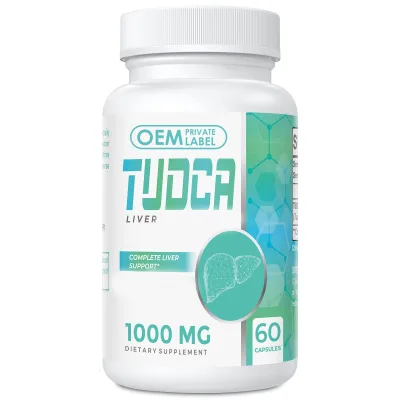
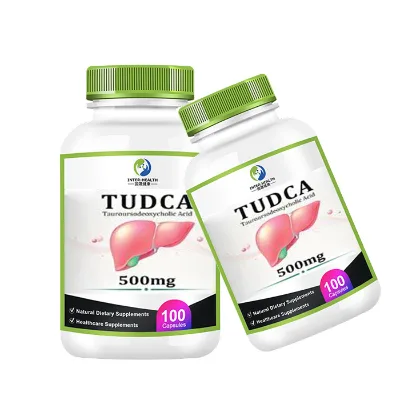
Product attributes observed in listings reveal a strong emphasis on customization and specific packaging formats. Many suppliers offer customization options, allowing buyers to tailor the product to their specific branding needs, including logo printing and bottle capacity variations. Common packaging formats include aluminum foil bags, carton boxes, and individual bottles, with standard bottle capacities often listed as 60, 90, or 120 capsules. Some listings also indicate bulk packaging options, which may be suitable for repackaging operations. Buyers should carefully review these specifications to ensure that the packaging protects the product from moisture and light, which are critical factors in maintaining the stability of TUDCA capsules over their shelf life.
Technical Specifications to Verify
Verifying the technical specifications of TUDCA capsules is essential to ensure product consistency and efficacy. Buyers should prioritize suppliers who provide clear information on the assay methods used, such as UV or HPLC (High-Performance Liquid Chromatography), to confirm the purity and concentration of the active ingredient. The main ingredient is typically listed as TUDCA, and the product should be labeled as pure nature or health food grade, depending on the intended application. It is crucial to verify that the assay results align with the supplier’s claims and that the testing methodology is robust enough to detect impurities or degradation products that could affect product safety.
The physical specifications of the capsules, including dosage form, dose, and shelf life, must be clearly defined and consistent across batches. Typical specifications include a dosage of two capsules per day, with a shelf life of 24 months when stored in a cool, dry place away from sunlight. Buyers should also verify the single package size and gross weight to ensure accurate logistics planning and cost estimation. Additionally, the product model or brand name, such as HB-TUDCA or lnbol, should be checked for consistency with the supplier’s catalog and any contractual agreements. Ensuring that these technical details are accurately documented helps prevent discrepancies during quality control and regulatory audits.
Compliance and Safety Documentation
Compliance with regulatory standards is a non-negotiable aspect of sourcing TUDCA capsules, particularly for products intended for health care and food applications. Buyers must verify that suppliers hold relevant certifications, such as FDA, ISO, HACCP, GMP, and BRC, which indicate adherence to good manufacturing practices and quality management systems. These certifications are critical for ensuring that the production environment is controlled and that the product meets international safety standards. Buyers should request copies of these certificates and verify their validity with the issuing bodies to avoid relying on outdated or fraudulent documentation.
Safety documentation should also include detailed information on applicable and non-applicable populations, as well as storage and handling instructions. TUDCA capsules are typically intended for adults, including men and women, but should not be consumed by pregnant women, newborns, or children. Buyers must ensure that the product labeling clearly reflects these restrictions to prevent misuse and potential liability issues. Additionally, the storage conditions, such as keeping the product in a cool, dry place away from sunlight, must be communicated to the end-user to maintain product integrity. Proper compliance documentation not only protects the buyer from regulatory penalties but also builds trust with consumers who rely on accurate safety information.
Cost Drivers and Commercial Terms
Understanding the cost drivers and commercial terms is vital for negotiating favorable procurement agreements. The price of TUDCA capsules is influenced by factors such as the grade of the raw material, the complexity of the encapsulation process, and the packaging materials used. Buyers should be aware that customization options, such as logo printing or specific bottle capacities, may incur additional costs. Additionally, the MOQ plays a significant role in pricing, with larger orders typically benefiting from economies of scale. Buyers should request detailed quotations that break down these costs to understand the true value proposition of each supplier.
Commercial terms, including payment methods, lead times, and shipping arrangements, should be clearly defined in the contract. Buyers should negotiate terms that align with their cash flow requirements and supply chain capabilities. For instance, some suppliers may offer flexible payment terms for repeat customers, while others may require upfront payment for new orders. Lead times can vary based on the order size and production schedule, so buyers should plan accordingly to avoid stockouts. Shipping arrangements, including Incoterms and insurance coverage, should also be discussed to ensure that the product arrives in good condition and that risks are appropriately allocated between the buyer and the supplier.
Supplier Qualification and Quality Control
Supplier qualification is a critical step in the sourcing process, requiring a thorough evaluation of the supplier’s capabilities, reputation, and quality control systems. Buyers should conduct on-site audits or request virtual tours to assess the production facility, including the cleanliness of the manufacturing environment and the maintenance of equipment. It is also important to verify the supplier’s track record in producing TUDCA capsules and their ability to meet specific quality standards. Buyers should request references from existing customers and review any available performance data to gauge the supplier’s reliability and consistency.
Quality control measures should be integrated into the procurement process to ensure that the product meets the agreed-upon specifications. Buyers should establish clear acceptance criteria for incoming goods, including visual inspection, weight verification, and laboratory testing for purity and potency. Random sampling and third-party testing can provide an additional layer of assurance, especially for high-value orders. Buyers should also implement a feedback loop with the supplier to address any quality issues promptly and continuously improve the product. By prioritizing supplier qualification and rigorous quality control, buyers can minimize the risk of receiving defective products and maintain a stable supply chain.
Long-Term Procurement Checks
Long-term procurement checks are essential for maintaining a sustainable and resilient supply chain for TUDCA capsules. Buyers should regularly review supplier performance metrics, such as on-time delivery rates, product quality consistency, and responsiveness to issues. These metrics should be tracked over time to identify trends and potential areas for improvement. Buyers should also conduct periodic re-evaluations of supplier certifications and compliance documentation to ensure that they remain valid and up-to-date. This proactive approach helps mitigate risks associated with regulatory changes or supplier instability.
Continuous improvement initiatives should be encouraged through regular communication and collaboration with suppliers. Buyers should share market feedback and consumer insights to help suppliers refine their products and processes. Additionally, buyers should explore opportunities for cost optimization and efficiency gains, such as consolidating orders or negotiating long-term contracts. By fostering a partnership-based relationship with suppliers, buyers can create a more agile and responsive supply chain that adapts to changing market conditions. Long-term procurement checks, combined with strategic supplier management, ensure that the sourcing of TUDCA capsules remains cost-effective, compliant, and aligned with the buyer’s business objectives.
FAQs
What dosage is typical for TUDCA capsules for adults?
The listed products specify a dose of 2 capsules per day for adults. Follow the label directions on the specific product you purchase, since strength per capsule can vary by formulation. These products are labeled for adults and are noted as not applicable to pregnant women and newborns, so consult a healthcare professional before use.
What packaging options are available for TUDCA powder capsules?
Listed products are packed in bottles of 60 capsules, with pack sizes of 60, 90, or 120 bottles or in bulk. Cartons and boxes are the stated outer packing, and aluminum foil bags may be used for inner packing. Customization is available, so confirm exact packaging with the supplier before ordering.
Which certifications should TUDCA capsule suppliers have?
The listed products show FDA and ISO certification, with some also listing HACCP, BRC, and GMP. Certification varies by listing, so request current certificates for the specific product and facility. Food grade or health food grade status should also be confirmed alongside assay testing by HPLC or UV.
How is TUDCA capsule quality tested before shipment?
The listed specifications reference HPLC as the test method, with UV also used as an assay method. Ask the supplier for a certificate of analysis showing assay results for the batch you receive. Confirm whether third-party testing is possible and agree on testing terms before placing a bulk order.
Can I order TUDCA capsules with custom branding or packaging?
Customization is listed as available for these products, though some listings ship without logo printing by default. Discuss logo printing, bottle counts, and label design with the supplier before ordering. Minimum quantities and artwork requirements can differ per listing, so confirm these details in writing.
What is the shelf life and storage guidance for TUDCA capsules?
The listed products state a shelf life of 24 months. Store capsules in a cool, dry place and avoid direct sunlight to protect the contents. Keep bottles sealed until use, and check the printed expiry date on arrival before accepting a bulk shipment.
What are the typical minimum order quantities for TUDCA capsules?
Listed minimums vary widely, from 40 or 50 bottles to 100 bottles, with some bulk powder listings starting at 1kg. Sample orders may be possible at lower quantities. Confirm the MOQ for your chosen specification, bottle size, and packaging before requesting a formal quotation.
Where are these TUDCA capsules produced and shipped from?
The listed products originate from Shaanxi, China. Shipping terms, freight cost, and delivery time are typically negotiated with the supplier based on order size and destination. Ask for packing details, carton dimensions, and gross weights, such as the listed 0.150 kg single gross weight, to plan logistics.